Choosing the Right Lifting Device for Hardscape Installation
Avg. Read Time: 6 minutes, 28 seconds
Not long ago, installing a patio or retaining wall meant moving most materials by hand. Today, contractors regularly work with larger wall blocks, oversized slabs, and premium hardscape products that can weigh hundreds of pounds. As products have evolved, so have the tools used to install them safely and efficiently.
Hardscape Highlights
Short on time? Here are this article’s key takeaways…
No single lifting device is ideal for every hardscape application. The best choice depends on the products you install most often.
Mechanical lifters generally perform best on rough, irregular, or porous materials such as natural stone and many dry cast concrete products.
Vacuum lifters excel at handling dense, smooth materials such as architectural wet-cast slabs and wall units.
Before investing, consider your material mix, equipment, crew size, and the types of projects you want to pursue in the future.
Whether you're placing Rosetta Hardscapes, natural stone, or dry-cast products, selecting the right lifting device can improve jobsite safety, reduce worker fatigue, increase productivity, and help protect materials from unnecessary damage.
Two lifting technologies dominate today's hardscape industry: mechanical lifters and vacuum lifters. Each offers distinct advantages depending on the material being installed and the way your crew works. This guide explains how both systems operate, where each performs best, and what contractors should consider before making their next equipment investment.
Understanding Mechanical and Vacuum Lifters
While both lifting methods accomplish the same goal, they secure materials in very different ways. Understanding those differences is the first step toward choosing the right tool.
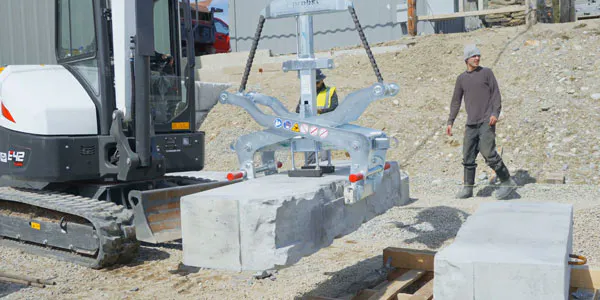
Mechanical Lifters
- Clamp or grip the material with pressure
- No external power required
- Best for rough, porous materials
- Simple operation and maintenance
- Reliable across varied textures
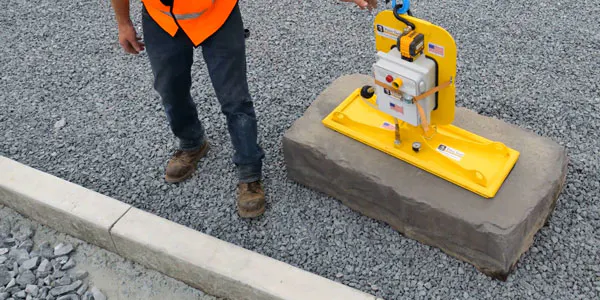
Vacuum Lifters
- Use suction to create an airtight seal
- Electric or battery-powered
- Best for smooth, dense materials
- Fast placement for large slabs
- Minimal edge pressure during lifting
Mechanical Lifters
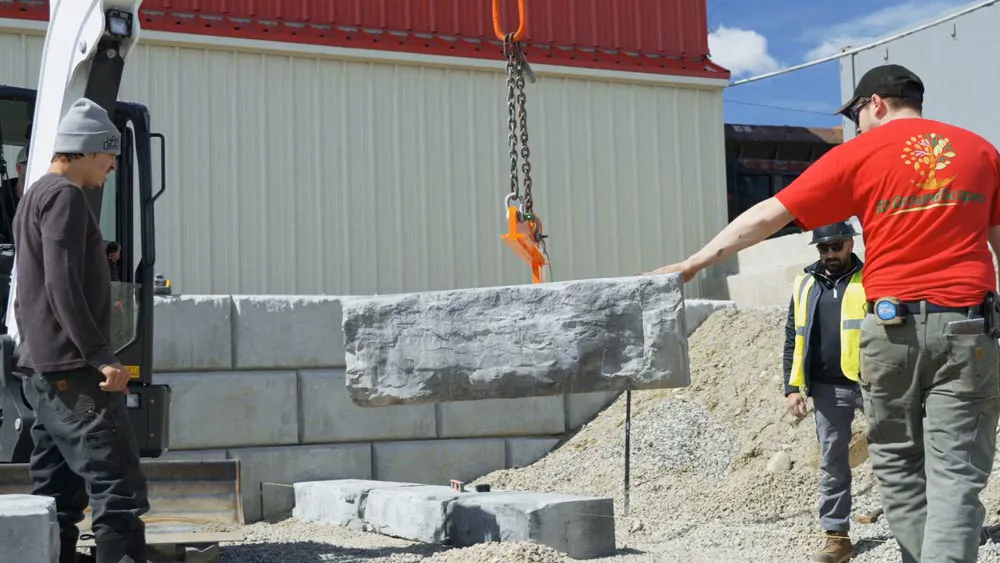
Mechanical lifting devices use clamping or gripping mechanisms to securely grab a product before lifting it. Depending on the design, the tool may tighten automatically as weight is applied, or it may use adjustable jaws sized to fit specific products. Common designs include scissor-style clamps, deep-throat grabbers, and adjustable jaw systems.
Why Mechanical Lifters are Preferred Mechanical lifters have become a favorite among contractors because they are dependable, require no power source, and perform well across a wide range of textures and materials. Their simple design also tends to require relatively little maintenance.
Why Mechanical Lifters May Not Be Preferred The tradeoff with mechanical lifters is versatility. Some models are optimized for a narrow range of product sizes, meaning contractors who install many different products may need additional attachments, or even multiple lifting devices, to cover every application.
Vacuum Lifters
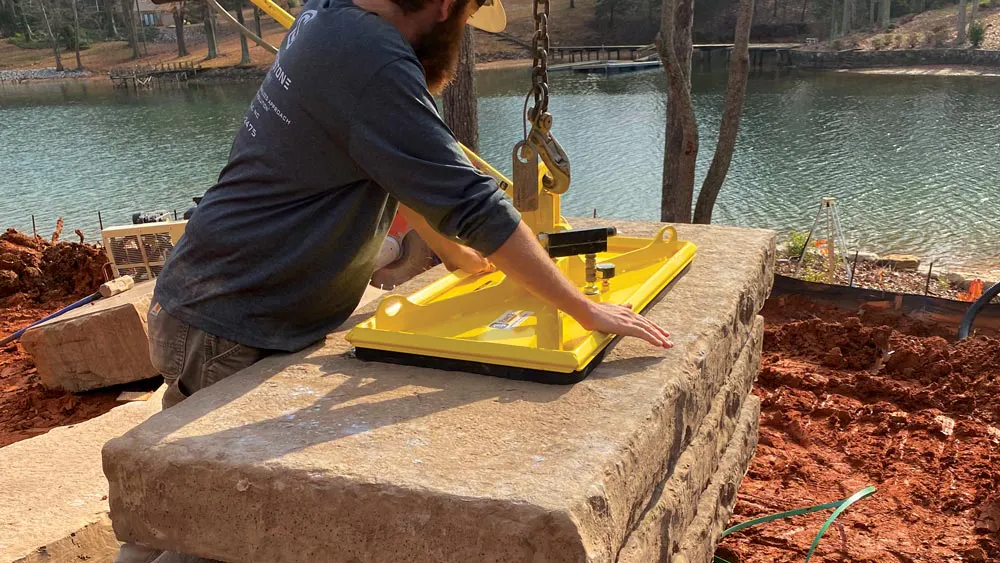
Vacuum lifting systems create suction between the lifting pad and the material being handled. Once an airtight seal is established, the vacuum pump maintains negative pressure while the material is lifted and positioned.
The effectiveness of a vacuum system depends on several factors, including pump performance, pad size, material density, and the ability to maintain a consistent seal.
Why Vacuum Lifters are Preferred Because vacuum lifters distribute force across the lifting pad instead of gripping the edges, they often provide smooth, controlled placement of large-format slabs and architectural concrete products. Many contractors also appreciate the speed and clean handling they offer on repetitive installations.
Why Vacuum Lifters May Not Be Preferred Vacuum systems rely on an airtight seal. Materials with highly porous surfaces, rough textures, or excessive dust can reduce suction performance, making them less suitable for certain applications.
Specialty Lifting Devices
Some products, like Rosetta’s Outcropping and Grand Ledge walls, require specially engineered lifting devices. For these products, the device is fixed to the rigging of a mini-excavator, skid-steer, or backhoe. It then attaches to the cast-in lifting loops on the back of each block, providing safe high-capacity lifting and enhanced maneuverability. Rosetta distributors will often make this device available to contractors for their use.
Matching the Lifter to the Material
The material you're installing should drive your equipment decision more than any other factor. Understanding how different products interact with each lifting method will help you choose the right solution for your business.
Dense Wet Cast Products Dense, wet cast concrete products are typically ideal for vacuum lifting systems. Their relatively smooth surfaces and low porosity allow vacuum pads to create a reliable seal, making placement both efficient and controlled. Because the lifting force is distributed evenly across the pad, contractors can often position large architectural slabs with less risk of edge damage.
Examples include many premium wall systems, large-format paving slabs, and architectural concrete products, including many Rosetta Hardscapes offerings. That doesn't mean mechanical lifters cannot be used successfully, but vacuum systems often provide efficiency and speed advantages when surface conditions allow.
Dry Cast Concrete Products Dry cast concrete presents a different set of challenges. Compared to wet cast products, many dry cast blocks and slabs have rougher textures, greater porosity, and less consistent contact surfaces. Those characteristics can make it more difficult for vacuum systems to maintain an airtight seal.
Mechanical lifters generally perform very well in these situations because their gripping force is largely unaffected by surface porosity. For contractors installing a wide variety of dry cast retaining wall blocks, pavers, and slabs, mechanical systems are often the more versatile choice.
Natural Stone Natural stone varies significantly from one material to another, making it one of the most challenging products to fit for lifting equipment. Split-face limestone, sandstone, and other textured stones often have uneven surfaces and irregular edges, making it difficult to maintain vacuum pressure. Mechanical lifters typically provide the most dependable solution for these applications because they grip the material rather than relying on suction.
There are exceptions, however. Dense, polished stones such as granite or marble can provide excellent sealing surfaces for vacuum lifters, allowing contractors to take advantage of their smooth handling characteristics.
Want to read more about the differences between outdoor living products?
Important Features to Consider When Buying
Once you've determined whether a mechanical or vacuum lifter best suits your typical applications, it's time to compare the features that can impact performance, versatility, and long-term value.
Mechanical
Best Textures: None Power: Lower Maintenance: Model-dependent Adjustability: Dry cast and stone Ideal Projects: Rough
Vacuum
Best Textures: Smooth Power: Battery/110V Maintenance: Moderate Adjustability: Pad dependent Ideal Projects: Wet cast and slabs
Before investing in a lifting device, consider the materials your crew installs most often and how those projects shape your daily workflow. The type, size, and weight of the products you handle, and whether wet cast concrete, dry cast products, or natural stone, should play a major role in your decision. It's also important to think about whether you'll be lifting materials by hand, with equipment, or both, as well as the size and experience of your crew. Finally, consider your long-term goals and the types of projects you'd like to pursue.
Well-Known Lifting Device Manufacturers
The hardscape industry offers a variety of reputable lifting device manufacturers, each with strengths in different applications. Those producing quality lifting equipment include GRABO, MQUIP, Pave Tool, Probst, and Vacuworx. But rather than searching for a single "best" brand, contractors should evaluate which products best fit their workflow and the materials they install most often. Be sure to compare features, compatibility, and long-term support before investing.
A Word About Cost
Cost is an important consideration, but it shouldn't be the only one. While lifting devices vary in price based on their type, capacity, and features, selecting equipment solely on upfront cost can limit productivity or require additional purchases later. Consider the total value of the investment, including versatility, durability, compatibility with the products you install most often, and the potential to improve safety and efficiency over time.
For contractors who regularly install larger wall units or slabs, the right lifting device can often pay for itself through improved productivity, reduced material damage, and a safer, less physically demanding installation process.
Key Questions: Choosing the Right Lifting Device
Before making an investment, step back and evaluate how your crew works today and where you want your business to grow tomorrow.
- What materials do we install most often?
- Are those products primarily wet cast, dry cast, or natural stone?
- What is the typical weight and size of the materials we handle?
- Will the lifter be used by hand, with equipment, or both?
- How many crew members typically work together?
- Is maximum versatility more important than specialized performance?
- What types of projects (scope, product type, location) do I hope to pursue over the next several years?
Answering these questions will often narrow the field considerably and help you invest in equipment that delivers value well beyond your next project.
Whether you're installing wet cast walls or slabs, dry cast products, or natural stone, choosing equipment that aligns with your workflow can make every installation smoother and more productive.
As hardscape products continue to evolve, so will lifting technology. Investing in the right solution today and reevaluating your needs as your business grows can position your company to confidently take on larger, more complex projects in the years ahead.
Access More Contractor Resources
Continue your research with searchable product comparisons, real-world project spotlights, and insights from experienced hardscape installers.

Contributing Expert
Hardscape Nate
It's not his legal name, but "hardscape" is this guy’s way of life. Hardscape Nate Fuelleman has spent decades ensuring families get the most out of their yards and helping landscape contractors level up their outdoor living installation businesses. He geeks out over garden walls, pavers, steps, and fire features. From owner/installer to business and project consultant, including nearly seven years with Rosetta Hardscapes, Nate has done it all over a two-decade career making backyards better. He currently serves as Director - North America for Probst Handling Equipment.